
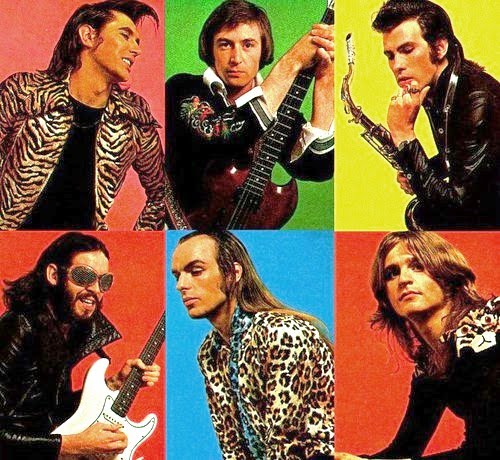
Glam was rock & roll’s first reexamination of itself. The topic was pomp, the music raw. It was the sound of durable disposability; the unwavering style was key. Glam was also a fan of the movies — the images were tantamount to the music. In glam you were a star before you got made. It was a gateway to personal freedom.
Roxy Music were a glam-rock band that was named for a cine.
With a love of kitsch and the avant-garde, they were a highly referential group. For them, style and substance ran together1. They were about something. Because artifice was meta-message, they were ironic. Because they were self-consciously postmodern and tongue-in-cheek, they were camp.
But for vocalist Bryan Ferry, however, glam was rooted in despair — not just tea with Dali, or the dirty cries of the salon. He sang like a wet tenor2, a stranded rake making fun of his pride. And the man listened to soul records. If crooning was a balm, it aimed directly at the singer himself.
Now. Great albums are works unto themselves. With the possible exception of Stranded or Country Life, Roxy never made one. The first side of the debut, Roxy Music, is the best side of an LP they ever did. It’s a perfect map. The album is everything the band was: cluttered and diffuse, fast but slow3. Sometimes they were too weird for their own good — too clever. But the back-beat was there. It gave life to the bricolage. It kicked the poodle.
Each Roxy Music single is a manifesto, a stance. “All I Want is You” is the band a bit more measured than they sounded on previous A-sides, and a bit warmer, too. They toss the gloss in both directions. By the shank of the evening, Ferry stops looking for “the real thing,” but we hear a mad dash of flash to which the listener and the singer keep returning. Both powerless and full of bite, the song is a great lasting nod to cheap thrills.
1Roxy is the best Roxy, but these are close: Dare (Human League, 1981), or The Lexicon Of Love (ABC, 1982).
2Like Bobby “Boris” Pickett of the “Monster Mash” (1962).
3The bog of prog.